Your office may look clean while still carrying germs on the surfaces people touch most.
That is because cleaning and disinfecting are not the same thing. Cleaning removes dirt, dust and some germs from a surface. Disinfecting uses a chemical product to kill or inactivate specific pathogens.
For a disinfectant to work properly, it must stay wet on the surface for a set amount of time. This is called the dwell time, contact time or kill time.
If your cleaner sprays and immediately wipes, the surface may look spotless, but the disinfectant may not have had enough time to work.
For facility managers, office administrators and business owners, this is an important question to ask when reviewing office cleaning services in Sydney: are you paying for a proper disinfection process, or simply a quick wipe?
What is disinfectant dwell time?
Dwell time is the period a disinfectant must remain visibly wet on a surface to achieve its stated germ-killing result.
The required time depends on:
- The product being used
- The concentration or dilution
- The pathogen the product claims to kill
- The type of surface
- The temperature and condition of the area
- The manufacturer’s label instructions
Some products may require 30 seconds or one minute. Others may need five or even ten minutes.
There is no single dwell time for every disinfectant. The product label is the controlling instruction.
If the label does not specify a contact time, Safe Work Australia guidance states that the disinfectant should be left on the surface for ten minutes before being removed.
Why the surface must stay wet
A disinfectant cannot complete its chemical action after it has dried.
If a product dries in 20 seconds but requires five minutes of contact time, it has not achieved the full claim on the label. The cleaner may have removed some germs through physical wiping, but the chemical disinfection process was cut short.
This is particularly important with disinfectant wipes. A wipe may leave only a thin layer of liquid, which can dry quickly on a large desk, door or kitchen bench. If the surface dries before the required time, the product may need to be reapplied.
Why quick-wipe cleaning fails
A fast cleaning routine often follows this pattern:
- Spray a surface.
- Wipe it immediately.
- Move to the next area.
This approach can remove visible marks and make a surface look polished. However, it may not provide enough wet contact time to reduce pathogens effectively.
There are also other reasons quick cleaning can fail:
- Disinfectant is applied over dirt, grease or food residue.
- The wrong product is used for the target pathogen.
- The product is diluted incorrectly.
- The product is not compatible with the surface.
- One cloth is used across multiple areas, creating cross-contamination.
- High-touch points are missed because the cleaner focuses on floors and visible dust.
- Electronic equipment is wiped with products that may damage it.
- Cleaning staff are not trained to follow the label or Safety Data Sheet.
The RACGP cleaning guidance explains that disinfectants must be used at the correct concentration, against the relevant microorganism and for the required wet-contact time.
Cleaning must come before disinfection
Disinfectant is not a replacement for proper cleaning.
Dust, grease, food particles and other organic matter can reduce the effectiveness of some disinfectants. A professional process normally involves:
- Cleaning: physically remove dirt and contamination with detergent, water and mechanical wiping.
- Disinfection: apply a suitable disinfectant to the clean surface.
- Dwell time: keep the surface visibly wet for the period stated on the label.
- Drying or rinsing: allow the surface to air dry, or rinse food-contact surfaces if the product instructions require it.
This two-stage approach is especially important in busy offices, shared kitchens, reception areas and buildings with a high volume of visitors.
The high-touch office surfaces that matter most
Not every surface has the same level of risk. Your cleaning plan should prioritise places touched frequently by multiple people.
Desks and shared workstations
Individual desks may be used by one person, but hot-desking creates a higher risk of cross-contamination. Shared desks, meeting tables, chair arms, phones, keyboards and mice require a surface-safe cleaning method.
Always follow the equipment manufacturer’s instructions before applying liquid to electronics.
Door handles and push plates
Door handles are touched repeatedly throughout the day. Include:
- Main entry handles
- Meeting room handles
- Toilet doors
- Storeroom handles
- Push plates
- Door frames around hand height
These areas can easily be overlooked when a cleaner is working quickly.
Kitchen benches and appliance handles
Office kitchens combine frequent contact with food residue and moisture. Prioritise:
- Kitchen benches
- Fridge handles
- Microwave buttons and handles
- Kettle and coffee machine controls
- Cupboard handles
- Sink taps
- Shared tables
Food-contact surfaces may need rinsing after the disinfectant has completed its dwell time. The product label will tell you whether rinsing is required.
Lift buttons and handrails
Lift buttons, stair rails and reception counters are common high-touch points in multi-floor offices and strata buildings. They should be included in the scheduled cleaning checklist rather than treated as an occasional extra.
Light switches and shared controls
Light switches, printer touchscreens, photocopier panels, air-conditioning controls and room-booking screens are easy to miss because they are small. They still receive repeated contact throughout the working day.

How to check whether your current cleaner is doing it properly
You do not need to stand over your cleaning team every night. However, you should be able to verify that the process is planned, documented and practical.
Ask about wet-surface timing
Ask your provider:
- What is the required dwell time for the disinfectant being used?
- How do cleaners keep large surfaces wet for that period?
- What happens if the surface dries before the time is complete?
- Are separate cloths used for kitchens, bathrooms and general office areas?
A vague answer such as “we spray and wipe everything” should prompt further questions.
Check the product labels and Safety Data Sheets
Your cleaning provider should be able to identify:
- Product name
- Intended use
- Dilution instructions
- Contact or dwell time
- Target pathogens
- Surface compatibility
- Required personal protective equipment
- Storage and handling requirements
Safe chemical use also involves correct labelling, storage, training and access to current Safety Data Sheets.
Review the cleaning checklist or logbook
A useful cleaning log should show more than “office cleaned”. It should identify the areas and tasks completed, such as:
- High-touch points disinfected
- Kitchen surfaces cleaned and disinfected
- Shared equipment addressed
- Toilets and amenities completed
- Waste removed
- Issues or damage reported
- Date, time and cleaner initials
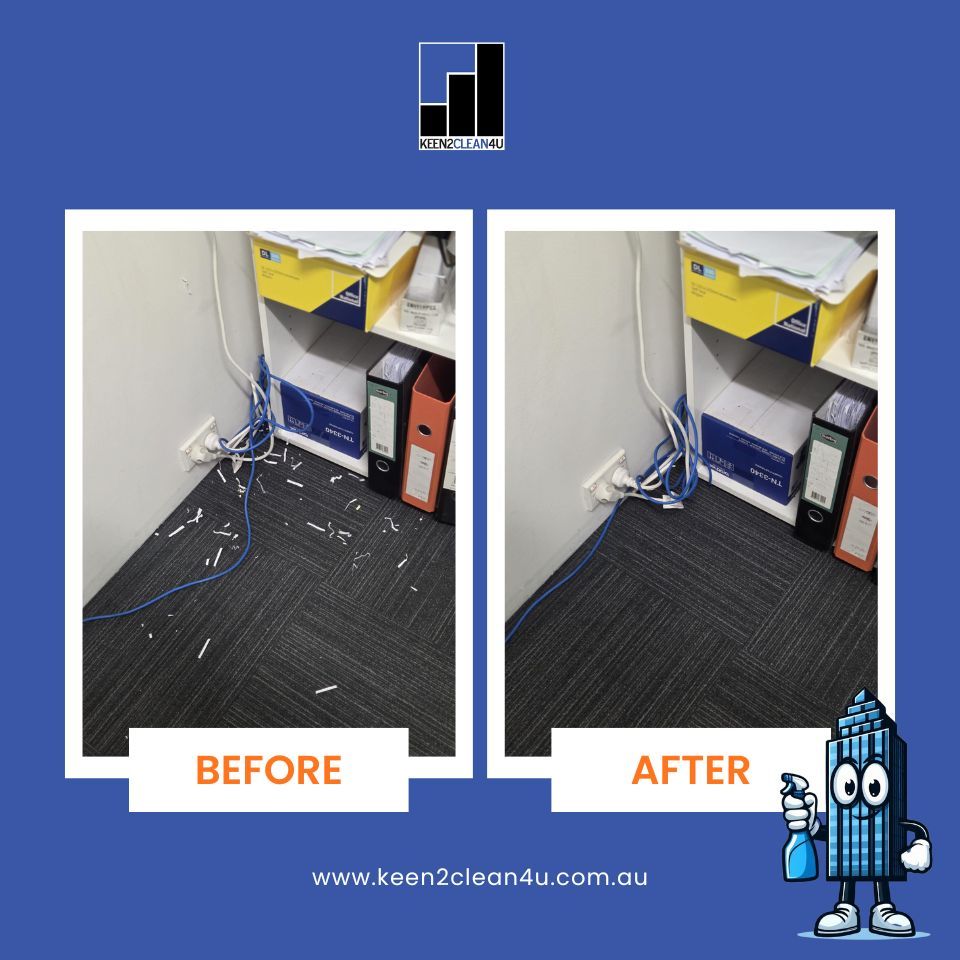
Photo reports can also improve accountability. They do not prove dwell time by themselves, but they provide a useful record that the scheduled areas were visited.
Observe the sequence, not just the result
If you conduct a site review, look for a logical workflow:
- Cleaner prepares the correct product.
- Visible dirt is removed first.
- Disinfectant is applied evenly.
- The cleaner allows the correct dwell time.
- Surfaces are not wiped dry too early.
- Cloths and equipment are changed or separated between zones.
A real-world Sydney office example
Consider a 40-person office in North Sydney with hot desks, two kitchens and several shared meeting rooms.
The office appears clean each morning. However, staff report recurring illness and the facilities manager notices that cleaning is completed in less than one hour. During a review, the cleaner confirms that desks, handles and kitchen benches are sprayed and wiped immediately.
The business updates its cleaning plan to:
- Prioritise high-touch points rather than treating every surface identically
- Clean visible dirt before disinfecting
- Use a product with a practical labelled contact time
- Work in sections so treated surfaces remain wet
- Record completion of key zones
- Provide photo reports after each shift
- Increase cleaning frequency for shared desks and meeting rooms
The goal is not to use more chemicals or create unnecessary disruption. The goal is to make the existing cleaning time more effective.
This type of improvement can support better workplace hygiene, reduce complaints and give employees and visitors greater confidence in the environment. It is not a guarantee against illness, but it is a more controlled and evidence-based approach.
Checklist for choosing commercial cleaners
Before appointing or renewing a cleaning contract, ask the following questions.
Cleaning and disinfection process
- Do you separate cleaning from disinfection where required?
- Do you follow the product’s labelled dwell time?
- How do you keep surfaces wet for the full contact period?
- Do you reapply product if the surface dries too quickly?
- Do you use different cloths or systems for separate areas?
- Can you provide product labels and Safety Data Sheets?
High-touch areas
- Are door handles and push plates included?
- Are lift buttons, rails and light switches included?
- Are desks, meeting tables and shared equipment included?
- Are kitchen benches and appliance handles included?
- Are reception and visitor-facing surfaces included?
Accountability and compliance
- Is there a written site-specific cleaning plan?
- Are staff trained in chemical handling and safe work procedures?
- Are cleaning tasks recorded in a logbook or digital system?
- Are missed tasks and maintenance issues reported?
- Are cleaners insured and appropriately supervised?
- Can the provider work around your access, security and trading hours?
Price matters, but the cheapest quote may not deliver the best result if the allocated time makes proper dwell-time cleaning impossible.
Maintenance tips for your office team
Professional cleaners handle the scheduled work, but your team can support better hygiene between visits:
- Keep shared desks clear so surfaces can be cleaned properly.
- Provide hand hygiene facilities in kitchens and reception areas.
- Encourage staff to clean personal keyboards and phones according to manufacturer instructions.
- Report spills, contamination and illness-related cleaning needs quickly.
- Avoid mixing cleaning chemicals.
- Do not ask staff to use disinfectant products without appropriate instructions.
- Review high-touch cleaning frequency when occupancy or visitor numbers increase.
Get more from your office cleaning services in Sydney
Dwell time is a small detail with a major impact. A surface can look clean without being properly disinfected, especially when a cleaner is expected to wipe an entire office in a very short window.
A professional cleaning plan should match your workplace, risk profile and operating hours. It should also make the process visible through clear checklists, trained staff, suitable products and reliable reporting.
At keen2clean4u, we provide office and commercial cleaning services for businesses across Sydney, including commercial cleaning Chatswood, North Sydney, Sydney CBD and surrounding suburbs.
Our service includes site-specific cleaning plans, after-hours options, trained Australian-based staff and photo reports after every clean. We also offer no lock-in contracts and $20 million public liability insurance.
If you are reviewing your current provider or need reliable professional cleaners for your Sydney office, request a quote and arrange an onsite assessment. We can help identify the areas that matter most and build a cleaning schedule around your business.