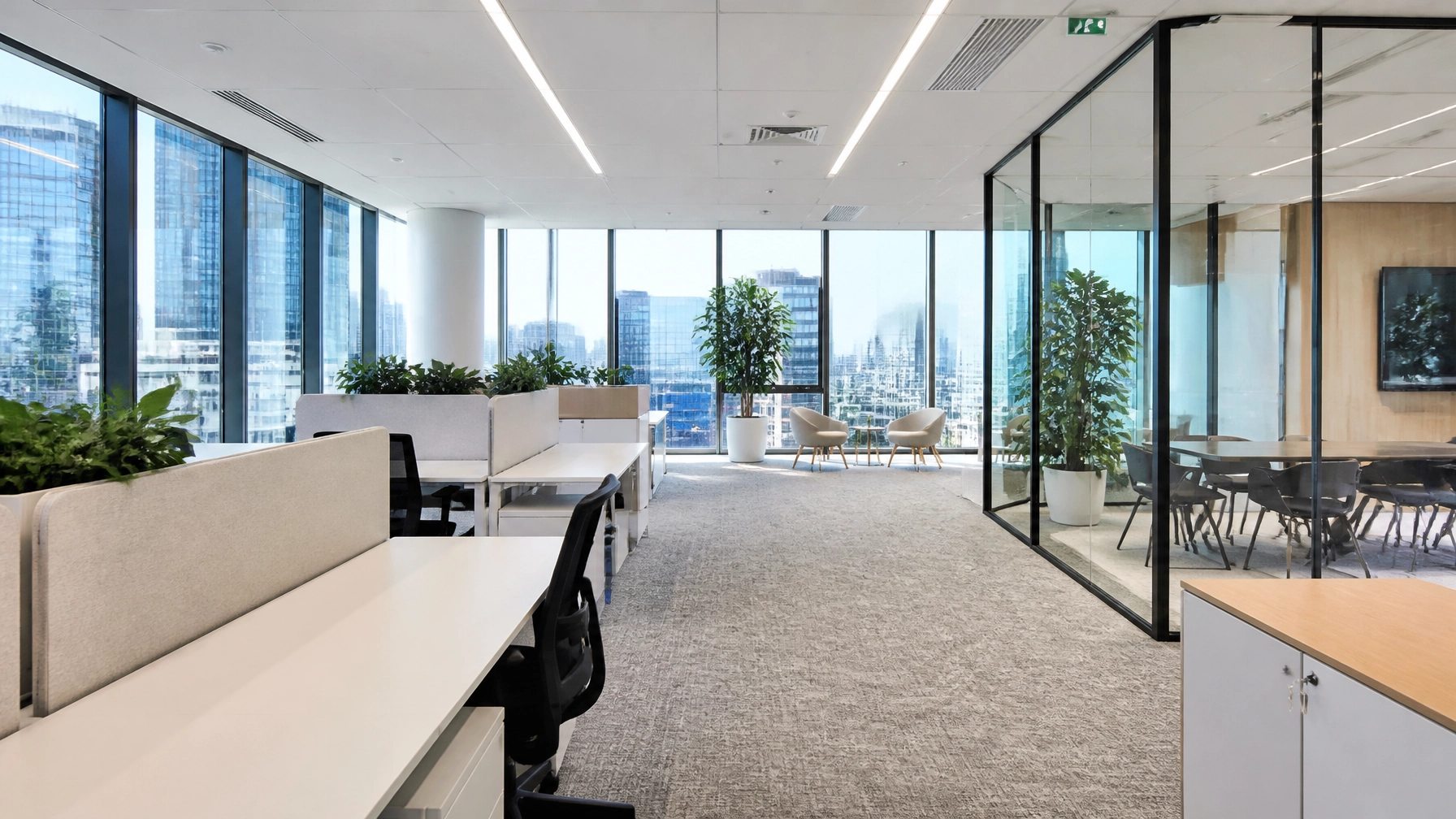
Walk into any high-rise in the Sydney CBD on a Monday or Friday morning, and you’ll likely notice something peculiar. The lights are on, the air conditioning is humming, but the rows of desks are largely empty. Fast forward to Wednesday, and the same office is a hive of activity, with every meeting room booked and the communal kitchen buzzing with life.
This is the reality of the 2026 workplace. Hybrid work isn’t just a "trend" anymore; it’s the standard operational model for businesses across Australia. However, many facility managers and business owners are still stuck in a 2019 cleaning mindset.
If your cleaning crew is still coming in every night to wipe down 200 desks: 150 of which weren't even touched that day: you aren't just wasting money; you're neglecting the areas that actually matter for employee health and productivity.
The question isn't whether you should clean; it’s how you should clean for the hybrid era. Are daily desk cleans dead? Let’s look at the data-driven truth about office hygiene in 2026.
The Traditional Daily Clean: A 2019 Solution for a 2026 Problem
For decades, office cleaning services followed a simple, linear path: if there was a desk, it was wiped. If there was a floor, it was vacuumed. This "blanket" approach worked when offices were at 90% occupancy five days a week.
In 2026, the traditional nightly clean has become a major source of inefficiency. When you pay for a fixed, all-inclusive nightly service regardless of usage, you are essentially paying for "ghost cleaning."
The Hidden Costs of Inflexible Scheduling
- Wasted Labor: Cleaning staff spend valuable time dusting empty workstations instead of deep-cleaning high-use communal areas.
- Environmental Impact: Unnecessary use of chemicals and water on surfaces that haven't been used.
- Resource Misallocation: While empty desks stay "spotless," high-traffic areas like the North Sydney office kitchens or meeting rooms may not be receiving the intensive sanitization required for peak midweek usage.
To stay competitive and maintain high standards, smart businesses are moving toward a more nuanced, authoritative approach: Zone-Based Cleaning.
Enter Zone-Based Cleaning: Adapting to the Hybrid Reality
The most effective way to manage a hybrid office in 2026 is to move away from a "one-size-fits-all" schedule and toward a zone-based model. This strategy prioritizes resources based on actual human activity and microbial risk.

Defining Your 2026 Hygiene Zones
- Zone 1: Entry & High-Traffic Circulation
- Includes: Lobbies, lift buttons, stairwell railings.
- Strategy: These areas require multiple daily touchpoint disinfections. In a busy building near Barangaroo, these should be handled by a visible day porter.
- Zone 2: Communal Amenities
- Includes: Washrooms, showers, and end-of-trip facilities.
- Strategy: High-intensity cleaning is non-negotiable here. Hygiene risk is highest in shared amenities, requiring strict adherence to Australian workplace health standards.
- Zone 3: Collaboration Hubs
- Includes: Meeting rooms and breakout areas.
- Strategy: These are the "new desks." They need to be cleaned between bookings or at least daily on peak occupancy days (typically Tuesday through Thursday).
- Zone 4: Individual Workstations (Hot Desks)
- Includes: Assigned desks and quiet rooms.
- Strategy: Cleaning is driven by occupancy data. If a desk wasn't used, it doesn't need a full wipe: it just needs a quick dust check.
- Zone 5: Specialized Areas
- Includes: Kitchenettes and IT rooms.
- Strategy: Kitchens require a deep-clean focus every single evening to prevent cross-contamination and pest issues.
By shifting your focus from "cleaning everything" to "cleaning what matters," you ensure that your commercial cleaning Sydney budget is working as hard as your team does.
High-Touch Points vs. Individual Desks: Where Your Budget Should Go
In a world where employees are hyper-aware of pathogens and workplace safety, the definition of "clean" has shifted from aesthetic to hygienic. A desk can look clean but be a breeding ground for bacteria. Conversely, a dusty desk is an eyesore but rarely a health hazard.
The Myth of the "Clean Desk"
In 2026, the individual desk is often the least of your worries. Most bacteria transfer happens in shared spaces. Research shows that office kitchen taps and lift buttons often harbor more pathogens than a toilet seat.
If you are looking to optimize your cleaning spend, you should prioritize high-touch point disinfection. This includes:
- Microwave handles and fridge doors: Used by everyone, often cleaned by no one.
- Coffee machine buttons: A primary "super-spreader" surface in the morning rush.
- Meeting room remote controls and touchscreens: These are touched by dozens of different people every day.
Focusing on these areas creates a tangible ROI in the form of reduced employee absenteeism. When your staff sees a cleaner actively sanitizing the Parramatta office kitchenette during the day, it also boosts their confidence in the workplace's safety.

The ROI of Smart Scheduling and Data-Driven Cleaning
One of the biggest shifts we’ve seen at keen2clean4u is the move toward data-driven scheduling. Modern offices use occupancy sensors or desk-booking apps to track exactly which parts of the building are being used.
The Benefits of a Flexible Partner
When you work with a cleaning provider that understands hybrid patterns, you gain:
- Dynamic Scaling: Ramping up staff on Wednesdays (the busiest office day in Sydney) and scaling down on Fridays.
- Compliance Certainty: Ensuring you meet all Australian workplace hygiene standards without overpaying.
- Deep Cleaning Integration: Using the "quiet" days (like Mondays) to perform tasks like deep cleaning and floor polishing without disrupting staff.
For many facility managers, this transition can seem overwhelming. However, searching for a cleaning company near you that specializes in flexible contracts is the first step toward a more efficient operation.
Local Expertise: Why Sydney Offices Need a Flexible Partner
Every Sydney suburb has a different rhythm. A law firm in Bondi Junction has different hygiene needs than a tech startup in Surry Hills or a warehouse office in Thornleigh.
Real-World Example: The "Tuesday Peak" in Chatswood
We recently worked with a multi-level strata complex in Chatswood that was struggling with hygiene complaints. Despite having a nightly cleaning crew, the bins were overflowing by Tuesday afternoon, and the kitchen looked "trashed" by mid-week.
The solution wasn't more cleaning: it was smarter cleaning. We shifted their schedule to include a "Day Porter" on Tuesdays and Thursdays who focused exclusively on Zone 2 (Amenities) and Zone 3 (Meeting Rooms). We then reduced the total nightly hours on Mondays and Fridays. The result? Complaints dropped to zero, and the overall cost stayed identical.

Practical Checklist: Is Your Current Cleaning Service Hybrid-Ready?
Selecting the right provider is crucial for your long-term success. Ask your current office cleaning services provider these four questions:
- "Can you adjust my invoice based on occupancy shifts?" If they only offer a fixed monthly fee regardless of how much of the office is used, they aren't a hybrid-ready partner.
- "Do you use a zone-based cleaning checklist?" They should be able to show you a clear plan of how they prioritize high-touch points over empty desks.
- "What is your protocol for 'hot-desk' sanitization?" Do they provide "Sanitized" markers or QR code updates for staff?
- "How do you handle 'Anchor Days'?" Can they provide extra support on the days your entire team is in the office?
Conclusion: Partnering for a Spotless Future
So, are daily desk cleans dead? Not entirely: but the unthinking daily desk clean certainly is. In 2026, a clean office is a result of strategy, not just elbow grease.
Maintaining a pristine environment is about more than just appearances; it's about building a culture of health and respect for your team. Whether you are managing a small office in St Leonards or a large corporate headquarters in the Sydney CBD, your cleaning routine must evolve to match your work habits.
At keen2clean4u, we specialize in this exact transition. We don’t just "clean buildings": we consult with you to create a hygiene plan that fits your specific occupancy patterns and budget. From high-end office cleaning in Sydney to comprehensive strata maintenance, we are the partner that moves at the speed of your business.
Ready to modernize your office hygiene? Contact Anthony and the team at keen2clean4u today for a site audit and a flexible cleaning quote tailored to your hybrid needs.