
Regular cleaning keeps the essentials under control: bins are emptied, bathrooms and kitchens are cleaned, floors are vacuumed or mopped, and frequently touched surfaces are wiped. But some areas collect dust and grime more slowly, out of sight or above normal working height.
That is where a quarterly detail clean comes in. It adds focused cleaning of the surfaces that routine visits may not cover, helping your workplace stay presentable between the bigger seasonal resets.
Why detail cleaning matters
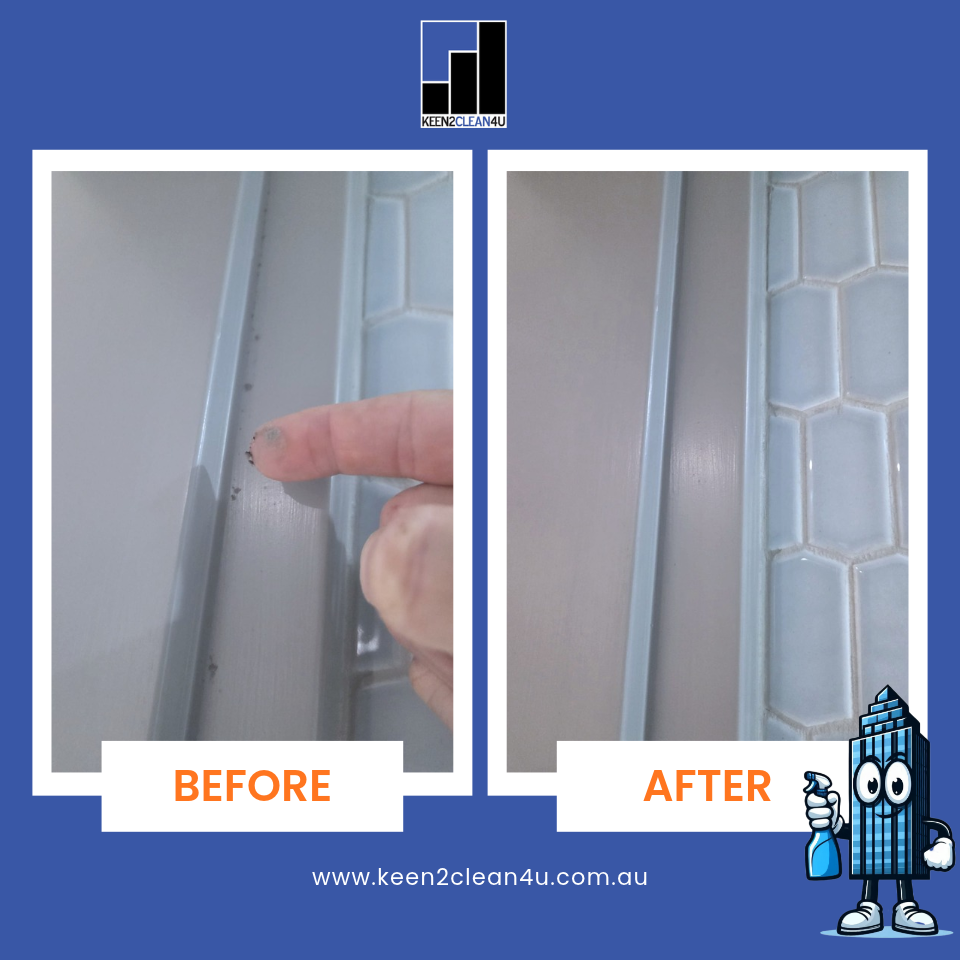
Dust settles on ledges, door frames and vents. Finger marks build up on rails and around doorways. Grit and grime gather in window tracks and corners. Because these areas are not always at eye level, it can be easy to miss the build-up until it becomes obvious to staff or visitors.
The image above shows how a rail can look tidy at a glance while still holding visible grime. A regular clean is important, but it may not include every edge, frame and fitting. A planned detail clean gives those areas dedicated attention.

A simple swipe across the top of a door frame can reveal dust that is easy to overlook during day-to-day cleaning. Similar build-up can collect on partition tops, vents, skirting boards and behind furniture.
What a quarterly detail clean can cover
The exact scope depends on your building, surfaces and access requirements. A typical office or commercial-space checklist may include:
- Ledges and dado rails: Dust and wipe horizontal surfaces, rails and exposed edges.
- Skirting boards: Remove dust and marks along wall edges, corners and behind accessible furniture.
- Window frames and tracks: Clear loose dust and grit from internal tracks, frames and sills.
- Door tops and frames: Wipe the tops of doors, door frames and other accessible high surfaces.
- Vent exteriors: Dust accessible vent faces and surrounding surfaces. This does not replace HVAC servicing or filter maintenance.
- Under and behind furniture: Clean accessible areas beneath desks, chairs and movable furniture, as agreed in the cleaning plan.
- Equipment edges and bases: Detail accessible exterior surfaces around items such as printers and other office equipment, without disturbing cables or moving equipment that should stay in place.
- High-touch details: Give particular attention to frequently handled points such as handles, switches and shared touchpoints, using products appropriate to the surface and the cleaning task.
- Floors and edges: Clean corners, thresholds and floor edges as well as the open areas, using a suitable method for the floor type.
Not every item needs the same treatment at every site. For example, a busy reception area may need more frequent attention than a small meeting room used occasionally. A good scope spells out which tasks are included and how often they will be done.
Floors need more than a quick pass
A floor can look clean in the middle of a room while dust and debris remain around edges, under furniture or in corners. Detail floor care starts with removing loose dirt, then using the right method for the floor’s material and condition.
Mopping technique matters too. A mop head can pick up soil from one area and spread it elsewhere if it is not changed or rinsed as needed. Likewise, water that has become visibly dirty is no longer useful for leaving a clean finish.

For a proper floor clean, the team should use a clean mop head and fresh water or cleaning solution, follow the product and floor-care instructions, and change the water when it becomes dirty. Floors should be left without excess moisture or residue. The right process will vary depending on the floor type, so timber, vinyl, tile and other surfaces should not all be treated as if they were the same.
How often should your business book a detail clean?
Quarterly is a practical starting point for many offices and commercial spaces: it creates a regular opportunity to reach areas outside the routine cleaning schedule. It is not a universal rule, though. There is no single quarterly interval that suits every site.
Consider the conditions in your workplace:
- Foot traffic: Busy entrances and shared spaces collect dirt faster.
- Dust levels: Nearby construction, open windows or a dusty work environment can increase build-up.
- Use of the space: Kitchens, gyms and shared facilities may need more frequent targeted work.
- Floor and surface types: Different materials have different care requirements.
- Changes at the site: Renovations, relocations or seasonal activity may call for an extra clean.
A lower-use office may find quarterly detail cleaning sufficient, while a busy site may need some tasks completed monthly or more often. Your regular cleaning plan can also rotate detail tasks across visits, rather than trying to cover every item in one session.
For Australian workplaces, cleaning arrangements should be suited to the workplace and its risks. Safe Work Australia’s model code of practice on managing the work environment and facilities provides guidance for maintaining a safe work environment. It does not prescribe one universal quarterly deep-clean schedule for every business.
A practical quarterly detail-clean checklist
Use this checklist to review what your routine service may not cover:
- Dust and wipe accessible ledges, dado rails and partition tops.
- Clean skirting boards, corners and floor edges.
- Remove dust and grit from internal window tracks, frames and sills.
- Wipe accessible door tops and door frames.
- Dust accessible vent exteriors and nearby surfaces.
- Clean under and behind movable furniture where access is safe and agreed.
- Detail accessible equipment bases and edges without disturbing cables or settings.
- Review frequently touched points and clean them appropriately.
- Vacuum or sweep before mopping, then use a clean mop head and fresh solution.
- Check that floors are free from visible residue and excess moisture.
Before the clean, let your provider know about restricted-access areas, delicate finishes, equipment that must not be moved and any site-specific safety requirements. This helps the team plan the work without disrupting your operations.
A simple example: the reception area
Imagine a reception desk that is wiped regularly and a floor that is mopped each evening. The space may still have dust along the skirting, marks on a dado rail, grit in the window track and dust along the top of a door frame. Visitors might not notice each area individually, but together they can make the space feel less cared for.
A quarterly detail clean adds those overlooked points to the plan. It complements regular cleaning rather than replacing it, helping the reception look consistently maintained from the floor up.
How to choose the right detail-clean scope
When comparing cleaning plans, ask:
- Which detail tasks are included, and which are separate?
- How often will each task be completed?
- Are under-furniture areas included, and what furniture can the team safely move?
- How will the provider handle different floor types?
- How are water and mop heads changed during floor cleaning?
- Can the scope be adjusted if the site’s needs change?
Clear answers help you avoid assuming a task is included when it is not. They also make it easier to check the standard after each visit.
Keep the details from building up
Between quarterly cleans, your team can help by cleaning spills promptly, keeping floors clear where practical and reporting recurring dust or marks. Ask your regular cleaners to flag areas that need extra attention, especially after maintenance work or changes to the layout.
A planned detail clean makes those less-visible tasks part of your cleaning schedule, not a last-minute fix when the build-up becomes hard to ignore.
Keen2Clean4U provides commercial cleaning for Sydney businesses, with cleaning plans shaped around the site and its needs. If you would like to review what your regular service covers and where a quarterly detail clean could help, learn about our commercial cleaning services or request a free onsite quote.